

June 2026 (v7.0)
Tips and guidance to help a floor official for any level of the game.
Getting ready for your game...
Refereeing is...
To anticipate what will happen - ‘Active mind-set’
Understand what is happening - ‘basketball knowledge’
React properly for what has happened - ‘ Mental Image Training
Get as much practice as you can. This can be training games during club training sessions. The more you do the better you become. Speak to your mentor or another official, ask them questions and get feedback.
Looking professional
You should be correctly attired when officiating basketball games, there is a uniform for all officials. Looking professional when officiating tells players and coaches that you are here to do a professional job.
Know the game
Not only should you know the rules of basketball, but the rules specific to the age group or league that you are officiating, as these can vary. You can find the Rules & Regulations published by the league you are officiating in on their websites.
Knowledge
Rules change! Keep up to date with the changes each season by attending an Officials Conference or Camp and reading any updates published by the YBL, BE or FIBA.
Next level…
Getting consistent positive feedback and evaluations about your officiating, think you now have what it takes to up-skill and complete at the next level? Speak with your mentor or coach about the next steps.
Pre-Game
Both referees need to check that the table officials are present, the table equipment and scoreboard are working. The match ball is to be checked for suitability for the game and is not to be used for the warm ups once deemed suitable.
Make sure teams have provided a team list to your table crew.
Complete a receipt and claim payment from the paying club. Receipts are available for printing from the YBL website or Basketball England.
Warm up suitably, including cardio and stretching are important.
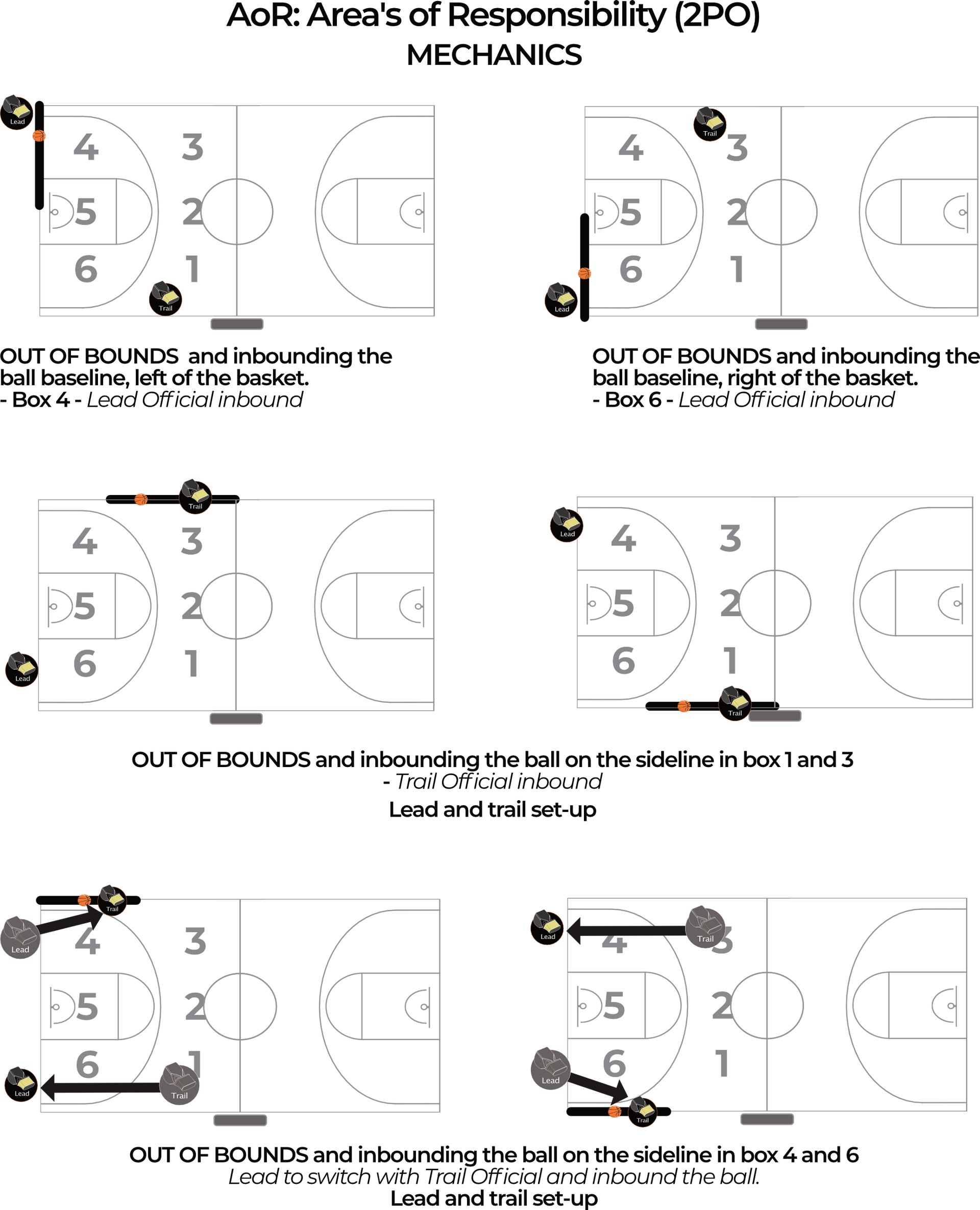
Discuss with your co-official(s), agree on how the game will be called. Agree on things to watch out for, game mechanics, area's of responsibility and show good teamwork.
Have a pre-game discussion (around 15/20 minutes before tip or 60/70 minutes at senior national league), with the officiating team and coaches. This meeting will set the standards and ground rules for the game (an outline is on the next page).
In-Game
Remember your area of responsibility and mechanical movements on lead and trail. Use the correct signals. Make sure you keep up with play. Run, don’t walk!
Use time-outs and time between quarters to discuss the game with your co-official(s). Check with the table crew if they are happy or have any points to raise. Remain professional, remember to hydrate yourself. Either stand in front of the table or stand towards the opposite side of the court to the table to review the game so far.
It is NOT acceptable for any official to start dribbling the ball or to start shooting the ball into any of the baskets.
It is important to be professional at all times, this works well and earns respect of the coaches and their players.
Post-Game
Shake hands with the players, coaches and the rest of the officials' team. Check the final score iscorrect, that a captain is not ‘signing the game under protest’. Once happy sign the scoresheet to complete the game. Do not rush out of the venue. Make sure everything is right before you leave. When possible leave with your co-officials.
Know you table crew's responsibilties
The scorer (SCR) is responsible for...
Recording of points, fouls and timeouts either elecgtronically or in the scorebook.
Administering the timeouts or subsitutes.
Use of the APA - alternate possession arrow.
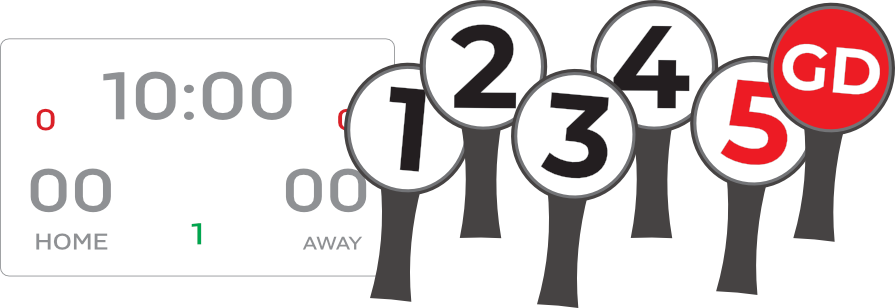
The timekeeper (TK) is responsible for...
Recording of points, fouls and timeouts on the game clock
Displaying the personal foul markers.
Use of the APA - alternate possession arrow.
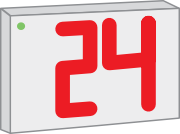
The shot clock operator (SCO) is responsible for...
Displaying and running the offense shot clock.
Blanking and displaying the devise at the correct times.
PlayHQ Electronic Scoring Guide
Basketball England - How to Guide to Live Scoring
Self-Evaluate - Improve yourself
You can use these questions to help yourself evaluate the game you have just officiated.
- Did basketball 'the game' win? If 'yes', then you had a reasonable game. If 'no', or 'not sure' then start to self analyse:
- Did I call all shooting foul?
- Did I call all the fouls which put the team at a disadvantage?
- Did I get into the correct position to be able to call fouls and violations correctly?
- Did I call poor skills, such as travelling/ illegal dribbles, so that playing standards are enhanced?
- Was I able to communicate my calls clearly and with authority?
- Did I cooperate with all my co-officials?
- Did I give them help when needed, but ensured that my areas of responsibility were upheld?
- If at all possible ask more experienced referees to give you a pointer to improve your game.
- Can you select one improvement from the above guidance and work hard at it during the next game?
Type of Fouls for all participants
Classification of Fouls
Any foul involoving free throws shall be entered with adding the corresponding number of free-throws (1, 2 or 3) beside the foul.
Those fouls that are circled will result being contributed to a persons game disqualification quota.
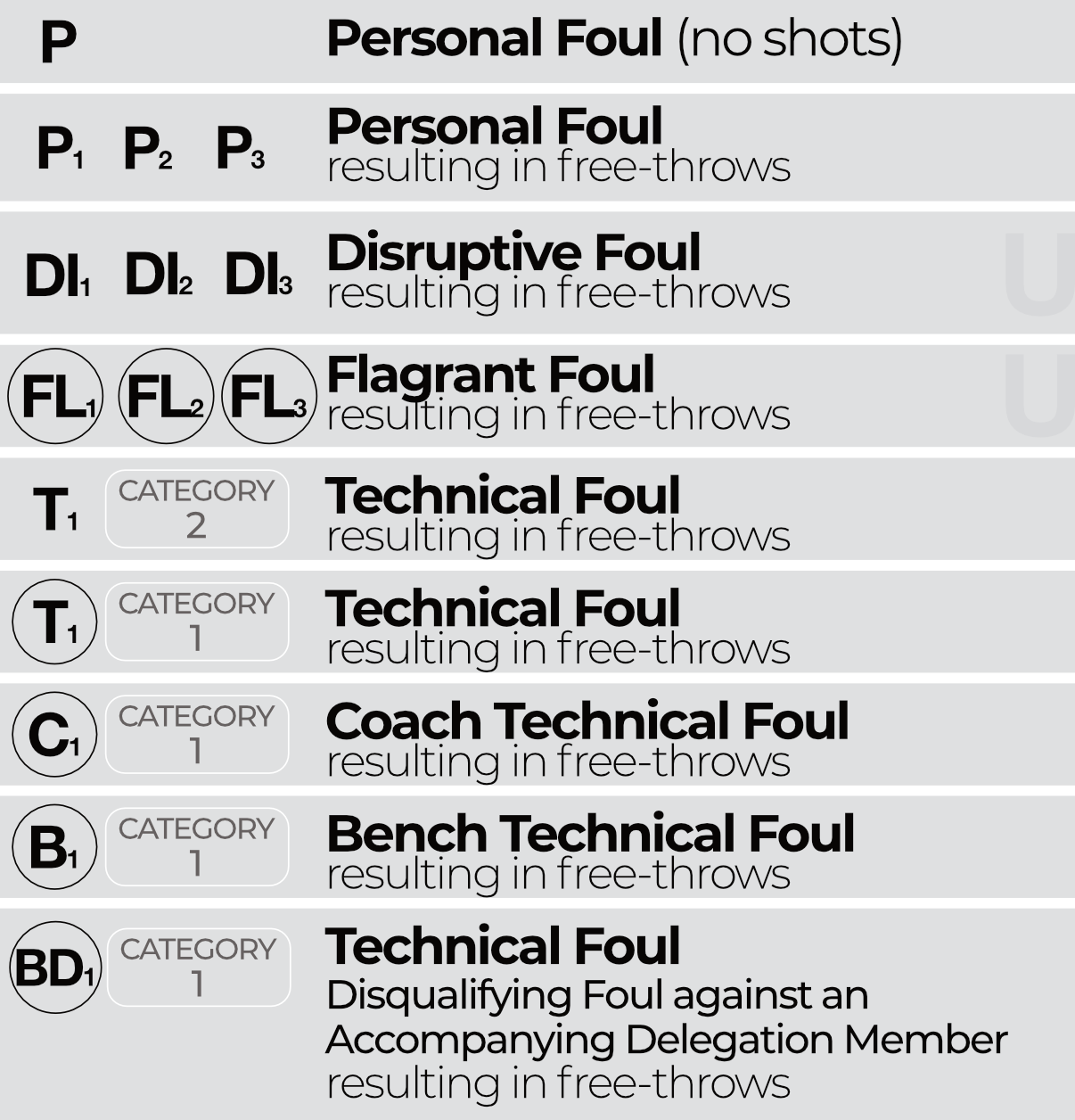
Game Disqualification Combinations
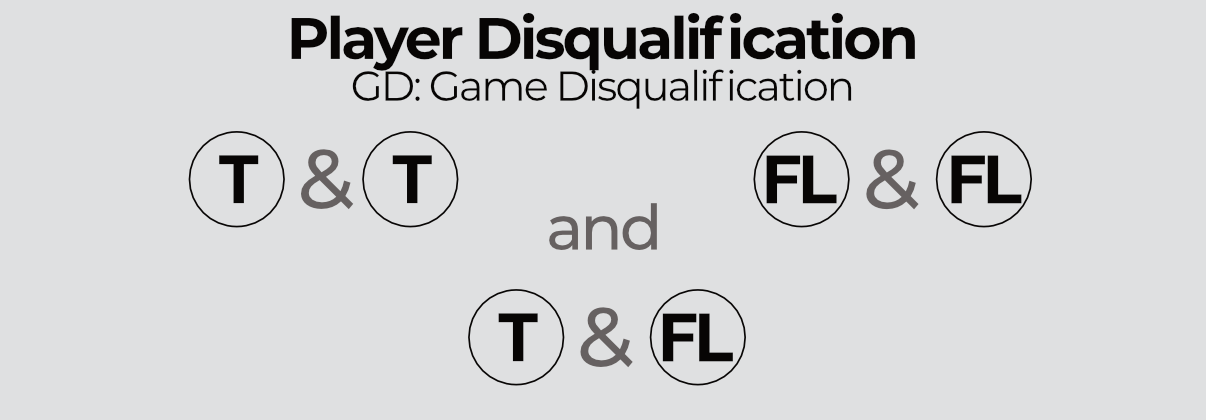
A player will be disqualified for the remainder of the game (GD) when charged with, 2 Category 1 Technical Fouls or 2 Flagrant Fouls (FL) or 1 Category 1 Technical Foul and 1 Flagrant Foul. These fouls, irrespective of the category, shall count towards team fouls.
Coach Disqualification Combinations
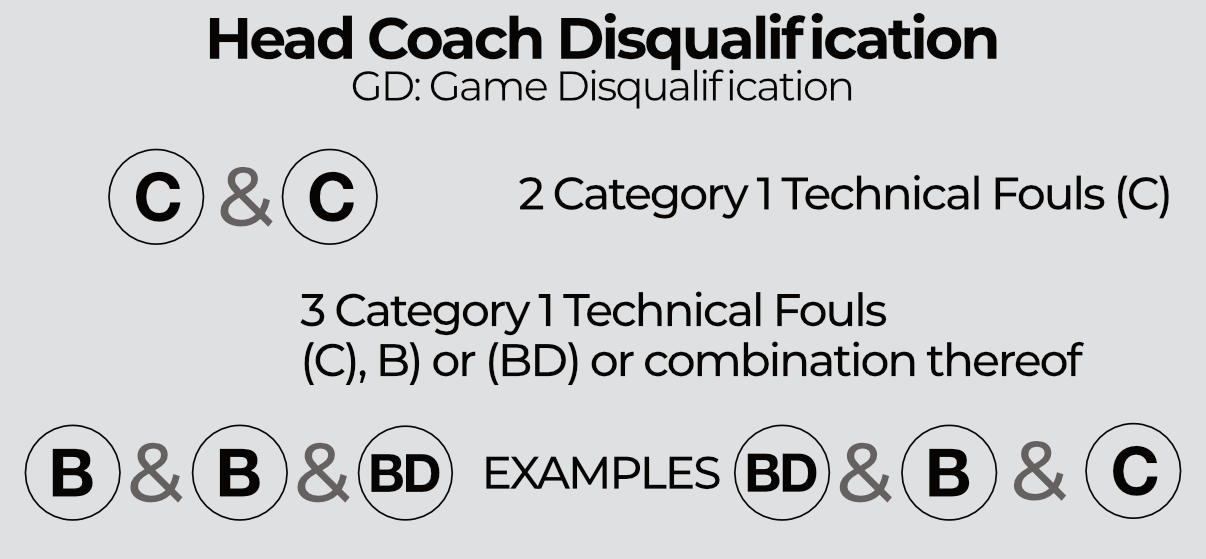
A coach will be disqualified for the remainder of the game (GD) when charged with, 2 Category 1 Technical Fouls (C) or a combination of up to 3 Category 1 Technical Fouls (C),(B) & (BD). These fouls, irrespective of the category, do not count as team fouls.
Disqualifications (recorded on the scoresheet)

A player, substitute, head coach or assistant coach that has been disqualified from the game shall have recorded a GD in the following box for being disqualified for a combination of fouls. Players do not need to leave the bench area.

A player, substitute, head coach or assistant coach that has been disqualified from the game for fighting shall have a 'F' in all remaining boxes. Individuals will need to leave the playing area.

A player, substitute, head coach or assistant coach that has been disqualified from the game - 'a straight DQ'. Individuals will need to leave the playing area.
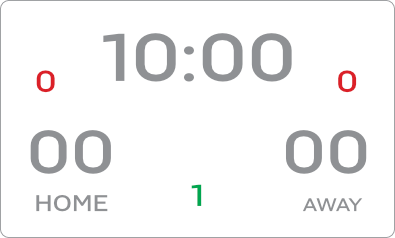
When should the clock stop?
Upon hearing a whistle from the referee and using 'stop-clock' signals
Following a timeout request (before a made basket) stopping on a made basket for the opposing team. The TO crew will help you with this by signaling from the table.
After a made basket in the L2M (last two minutes) in the Q4 & O/T periods.
When should you start the clock?
On the first legal tip of the ball (Q1), when the U1 lowers their arm and the ball touches a player on court.
When the referee lowers their hand on a inbound (sideline or baseline) ball.
After the last free-throw, after touching the ring, when legally touches a player. Or when a player touches the ball on court.
THE CLOCK DOES NOT STOP AFTER A BASKET
unless stated above
Positioning
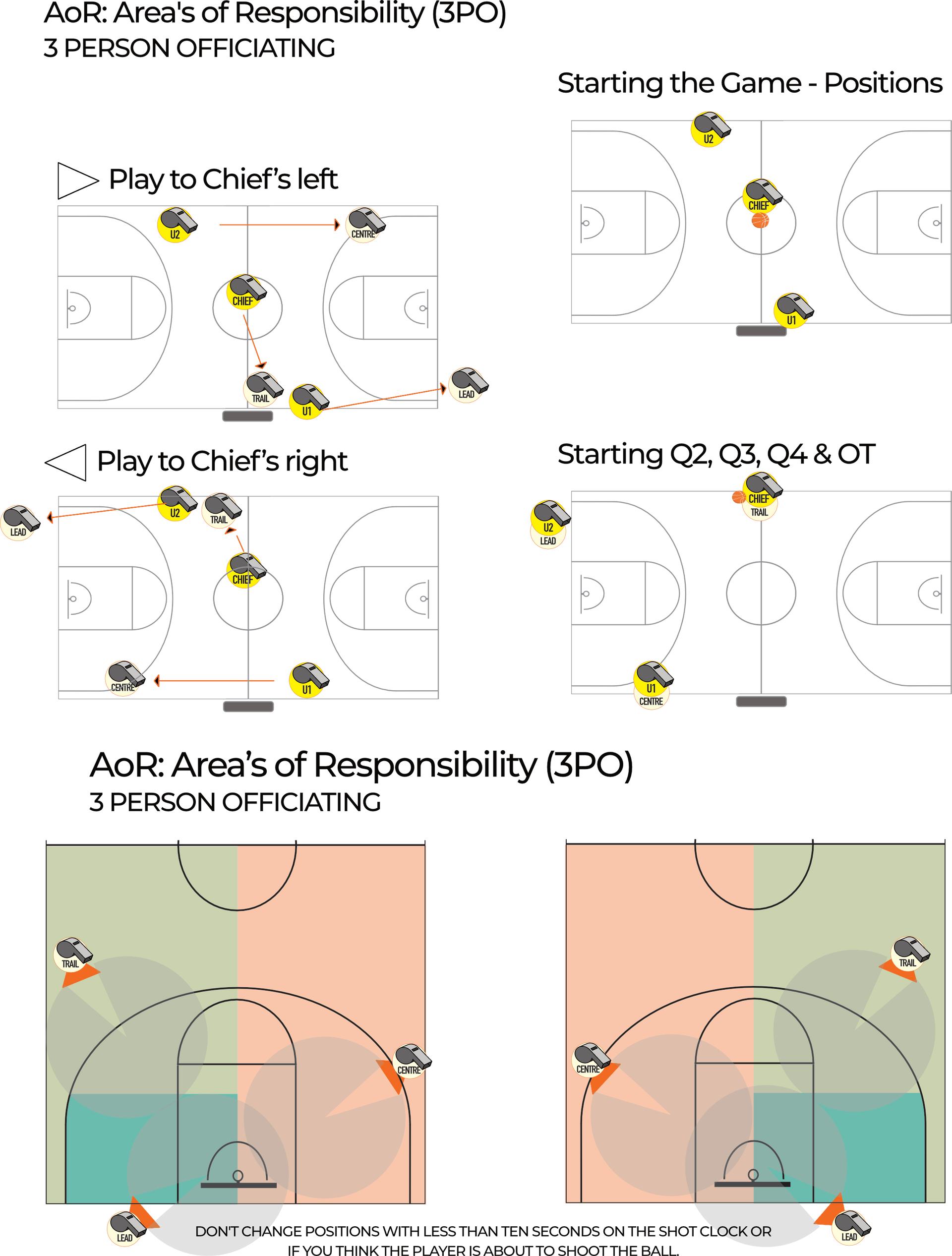
Crew Chief to become trail in any direction of play.
U1 to become lead in any direction of play (opposite the table).
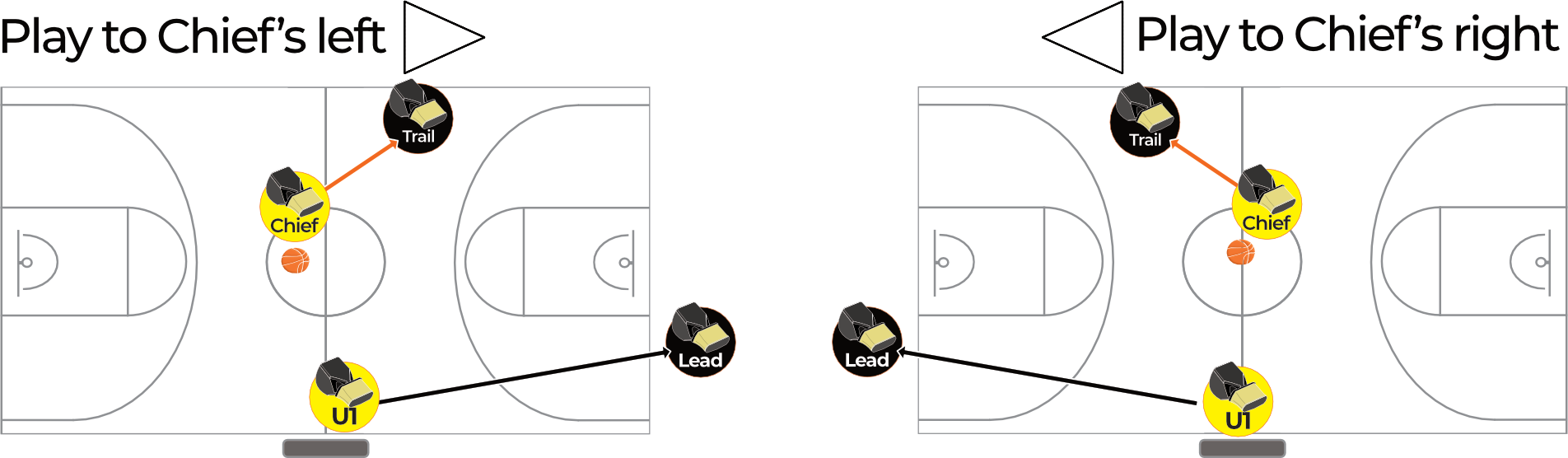
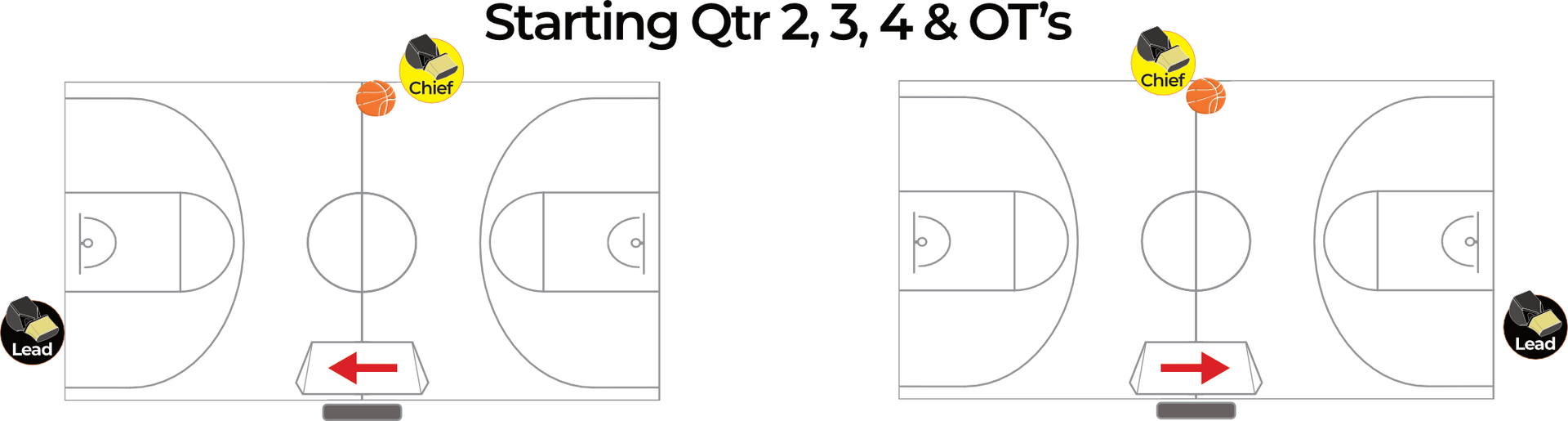
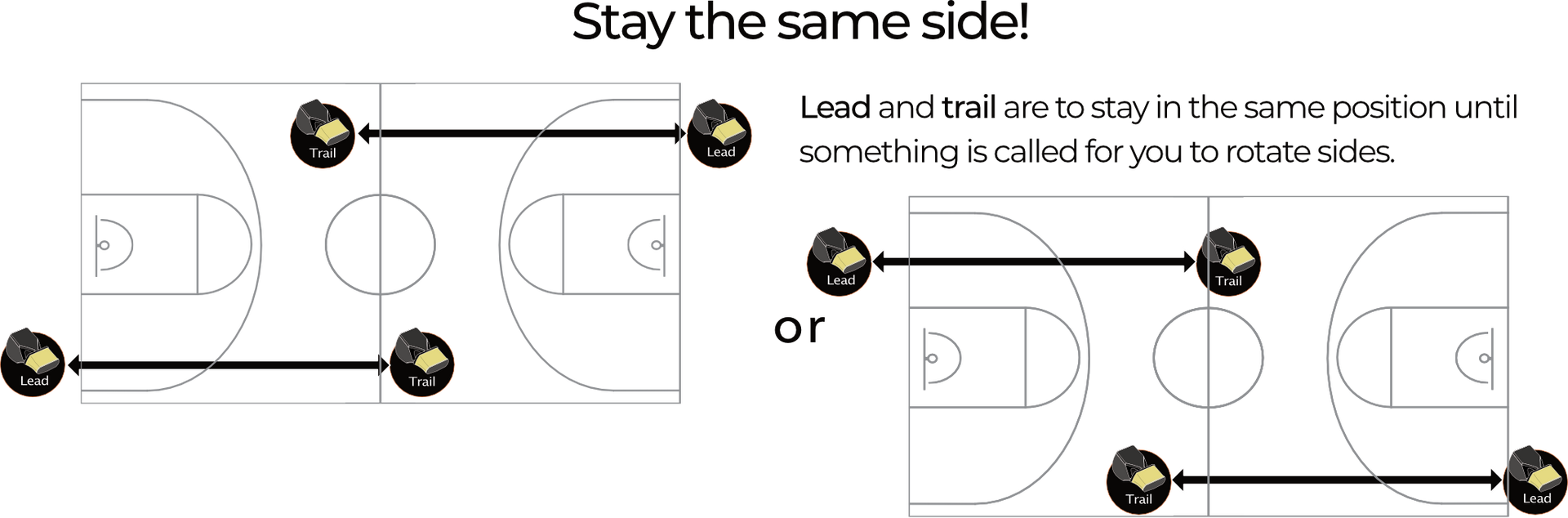
Area of Responsibility & Movements
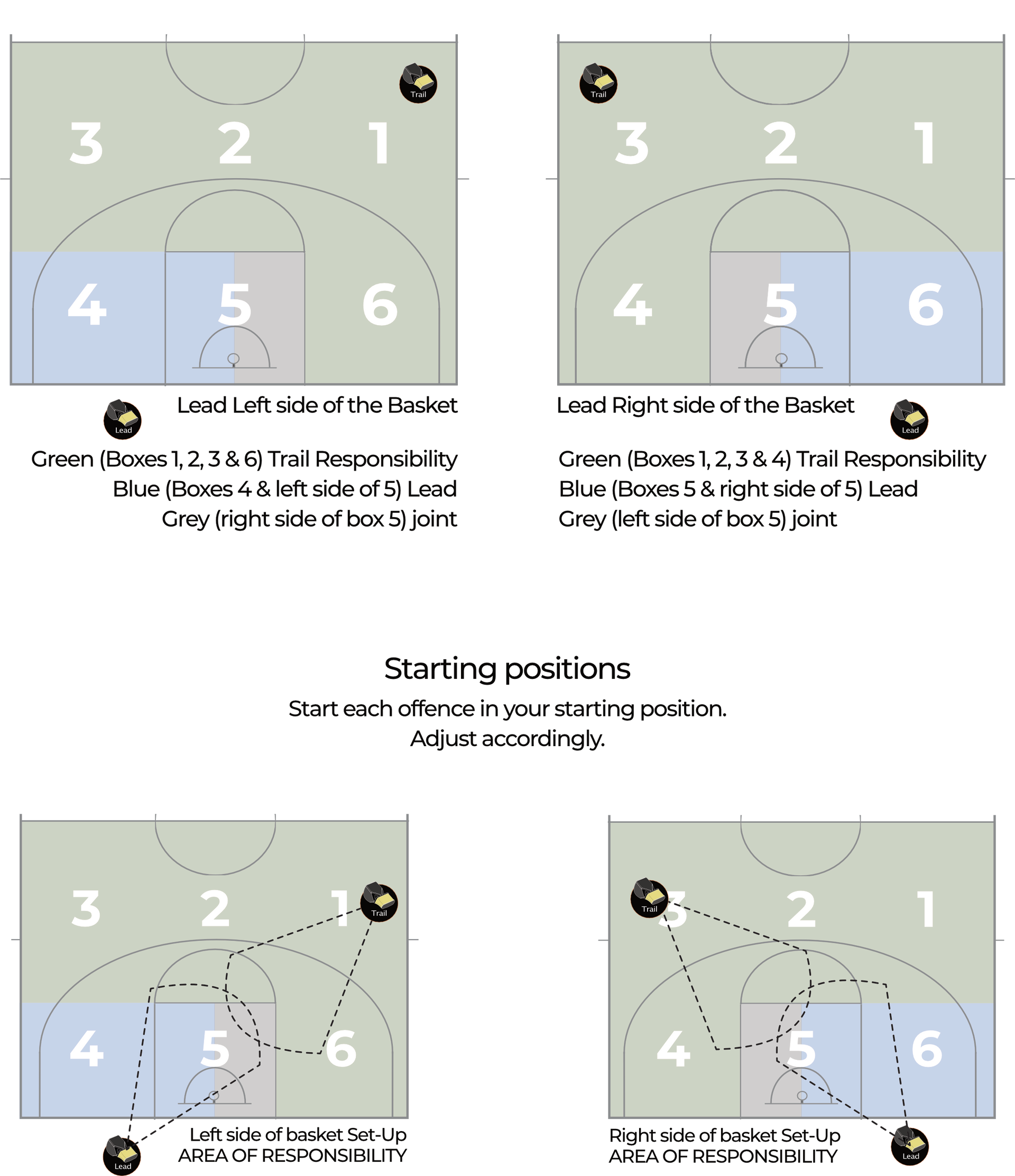
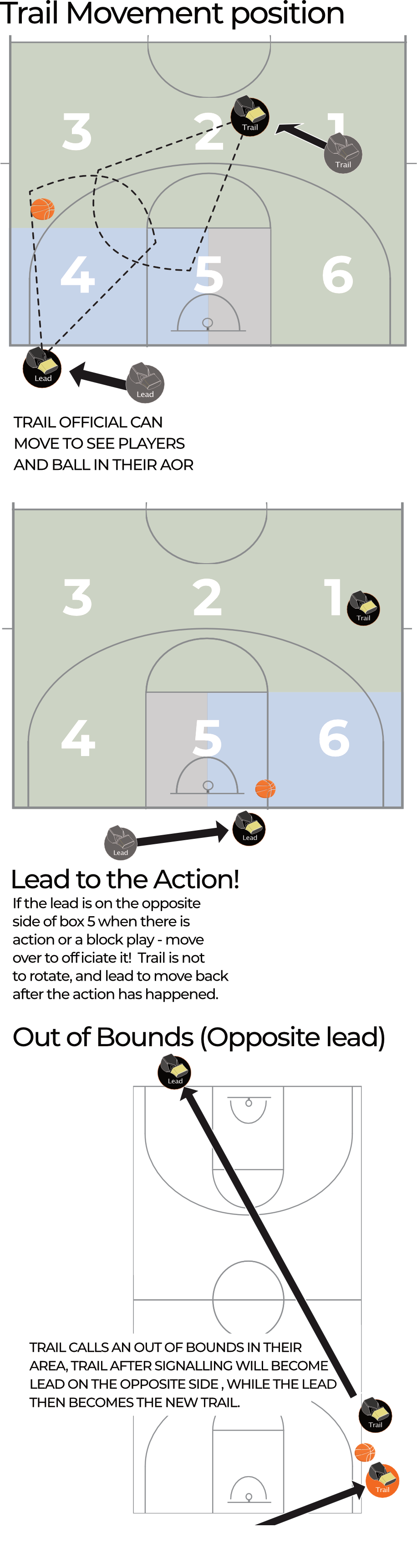
Area of Responsibility & Mechanics
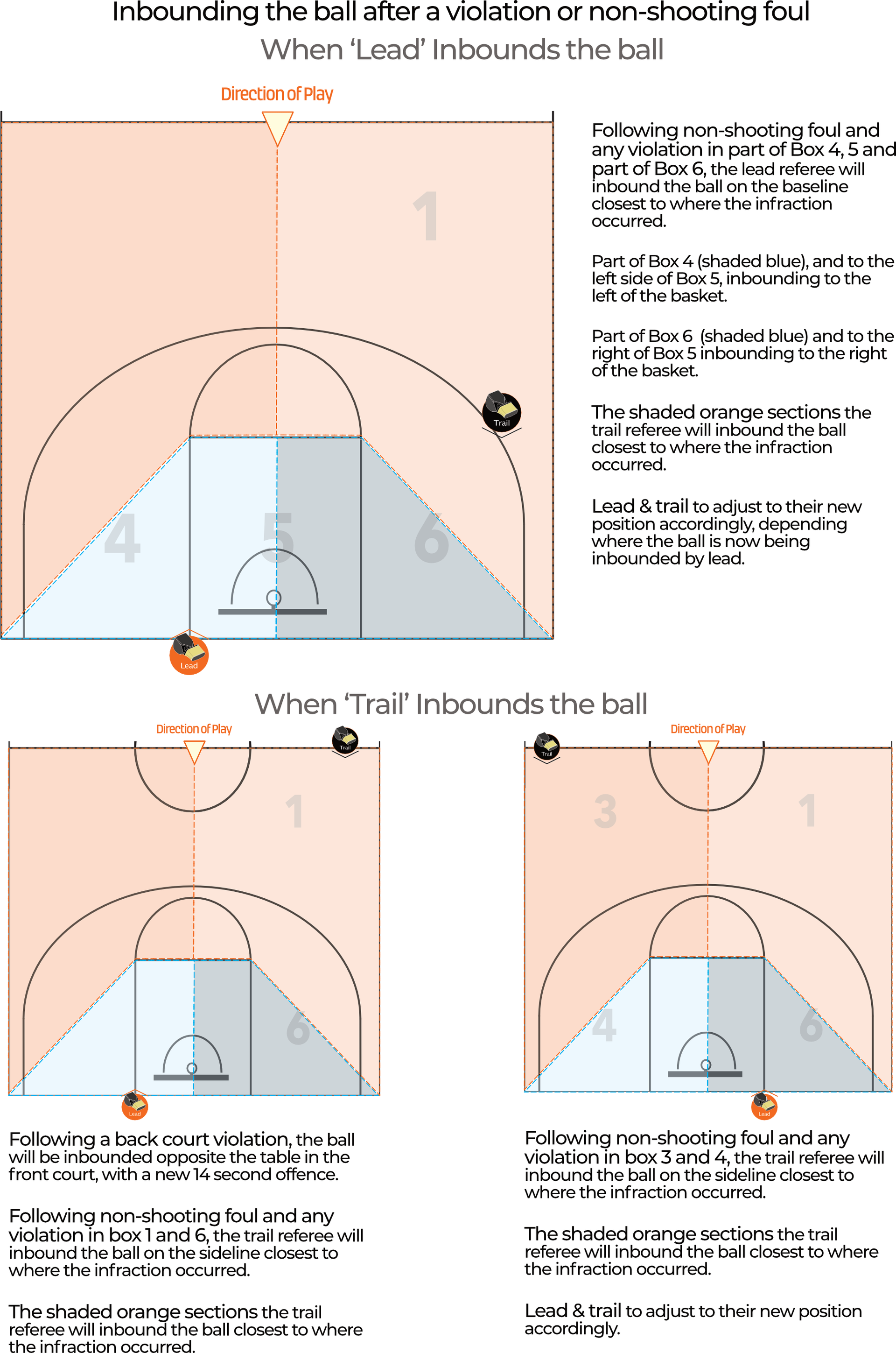
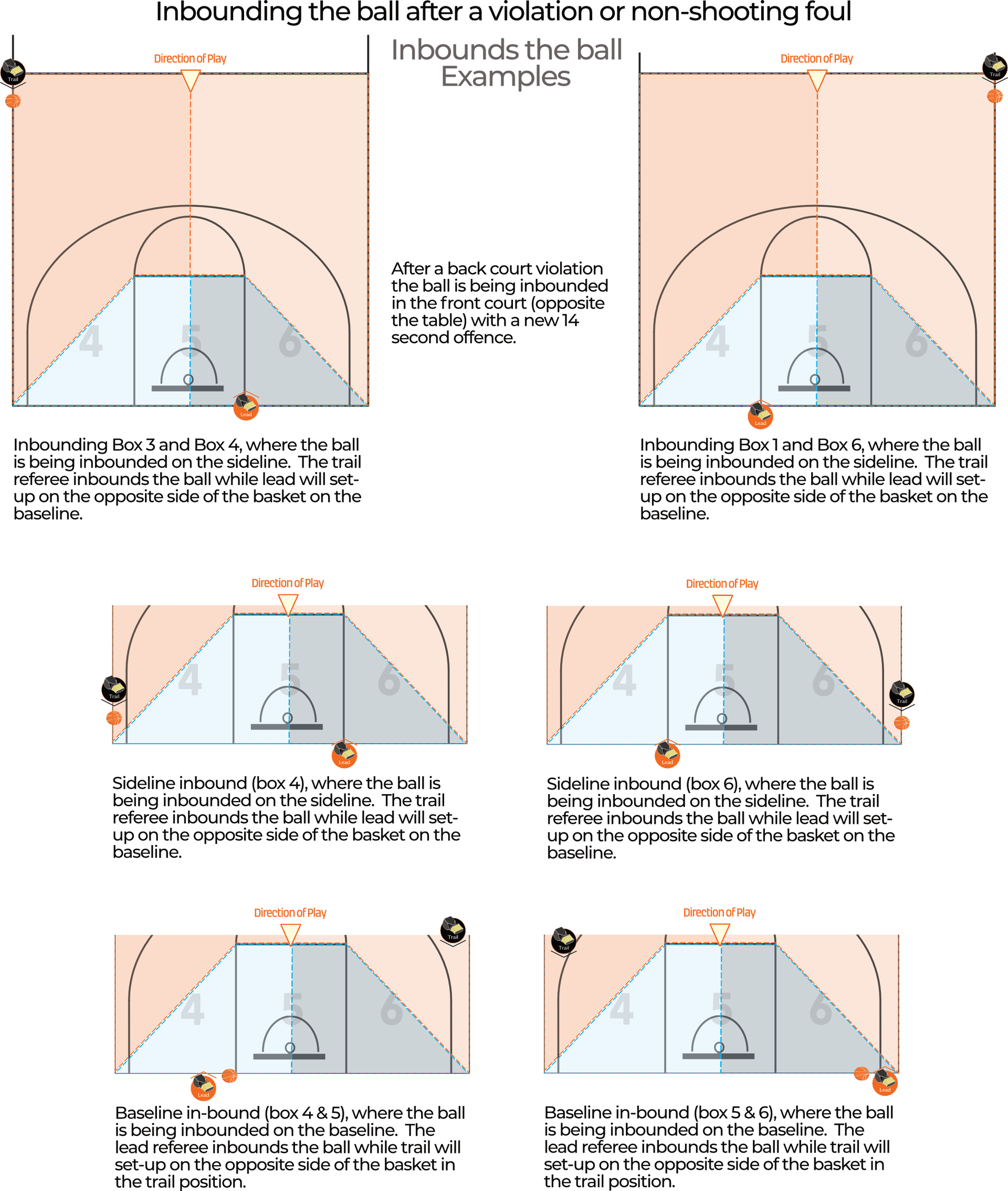
Introduction to 3PO